Autodesk Maya is sold through Autodesk's official subscription storefront with published list pricing and an optional Flex token model for intermittent use.
Autodesk's buy page lists Maya at $235 per month, $1,875 per year, or $5,625 for a three-year term for a standard commercial seat, and Flex at $300 for 100 tokens (about 16 Maya days per year at 6 tokens per day).
Qualifying individual creators under $100,000 annual revenue may use Maya Indie at roughly $305 per year, which is materially cheaper but revenue-capped and not a studio multi-seat plan.
Official component prices are public, but complete studio TCO still depends on seat count, contract term, render-farm usage, premium support, and hardware.
Add-ons such as extra Arnold capacity, pipeline integrations, and training are not fully priced on the public page.
Negotiation room appears strongest on multi-seat and multi-year enterprise deals, while month-to-month access carries the highest unit cost.
Buyers should treat published rates as list pricing and verify reseller, bundle, and collection packaging before budgeting.
Funkční zaměření a workflow
Users praise the node-based workflow for flexibility, precision, and reuse.
Reviewers value the strong compositing and review fit for VFX pipelines.
Long-tenured users highlight Maya as a comprehensive choice for animation, rigging, and effects work.
Nuke is excellent for compositing, but less comprehensive for full 3D animation work.
Many reviews describe strong functionality and professional results once proficiency is built.
Official docs and developer references show a pipeline-friendly product surface.
Uživatelské zkušenosti: klady a zápory
+Verified Software Advice reviewers frequently praise breadth of 3D tooling and output quality.
+Positive Sentiment+Users praise the node-based workflow for flexibility, precision, and reuse.
+Reviewers value the strong compositing and review fit for VFX pipelines.
•Several reviewers like overall capability but note a steep learning curve versus simpler tools.
•Value-for-money ratings are often good-not-great compared to functionality scores on Software Advice.
•Some feedback contrasts Maya with free alternatives while still acknowledging industry relevance.
•The product is powerful, but the learning curve is steep for new artists.
•Teams can use it at scale, but they often need extra pipeline investment.
−Recurring complaints cite high subscription pricing for individuals and small teams.
−Ease-of-use scores are commonly lower than functionality scores in aggregated user ratings.
−Hardware demands and UI complexity are mentioned as friction for newer users.
−Negative Sentiment−It is not a serious replacement for dedicated rigging or simulation tools.
−Complex scenes can be resource intensive and may trigger performance complaints.
−Pricing and edition gating can be a barrier for smaller studios.
Náklady provozu a požadavky na hardware
Maya is primarily desktop-installed professional software, but real studio TCO spans subscription licensing, certified hardware, pipeline integration, training, and render capacity beyond the base product fee.
Autodesk publishes Maya at $235/month, $1,875/year, or $5,625 for three years on its official buy page.
Maya Indie is about $305/year for qualifying creators, and Flex tokens offer intermittent-use pricing.
Core subscription and Flex list prices are public, but enterprise quotes, collection bundles, premium support, and full studio TCO still require direct commercial verification.
Pipeline scripting, asset management, review tracking, and farm schedulers often require additional tools and TD labor.
Plugin compatibility and major-version upgrades can force retesting, downtime, and migration work across production teams.
Autodesk documents 8 GB RAM minimum and 16 GB recommended, but dense FX and Arnold work typically needs far higher-spec GPUs and memory.
Annual subscriptions at $1,875 per seat are only the software baseline; multi-seat studios multiply cost quickly.
Nástroje pro integraci mezi Maya, Houdini a Nuke
Currently we scale down whole alembic scene (which is made in maya) as soon as we import it in houdini.
Maybe similar solution could applied to katana.
We can work that way.
But our compositors is not happy with it.
Because they have to composite images rendered in both maya and houdini.
Channels containing z or vector are different, and 'deep image' is not matched, so they should scale it.
So we tried to change maya's unit system to meter.
It failed because it's viewport does not properly working with small objects. (say 0.0001m).
Does anybody use centimeter unit in houdini?
This Scripts exports Poly-Geometry, Cameras, Lights and Locators from Maya to Nuke into one Setup Nuke-Scene.
If you want it also exports the Geometry as a sequence.
Make sure you have changed the two variable "nukePath" and "nukeExec" that they fit your system.
You should also maybe change the default Export-Path a few lines underneath.
But the script also ask for the Export-Path and the Export-Nuke-File-Name after it is launched.
Just select everything you want to export and run the Script.
Select every single object and not the group they are in.
If you select the the object and the group the object is in, both is gonna get exported.
Like in Nuke itself there are just Point-, Directional- and Spotlights supported.
If any parameter is animated it also exports the animation into Nuke.
It is currently just tested with Maya 2008 and Nuke 6.1 on Windows 7 and Maya 2011 on MacOS.
If you have any problems or questions just write me.
Jak přistupovat k výběru mezi Nuke a Maya
Buyer checks+Annual subscriptions at $1,875 per seat are only the software baseline; multi-seat studios multiply cost quickly.
Autodesk's buy page lists Maya at $235 per month, $1,875 per year, or $5,625 for a three-year term for a standard commercial seat, and Flex at $300 for 100 tokens (about 16 Maya days per year at 6 tokens per day).
Qualifying individual creators under $100,000 annual revenue may use Maya Indie at roughly $305 per year, which is materially cheaper but revenue-capped and not a studio multi-seat plan.
Official component prices are public, but complete studio TCO still depends on seat count, contract term, render-farm usage, premium support, and hardware.
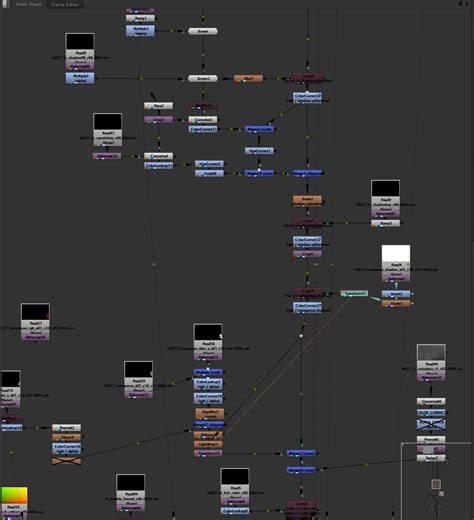
"CGI PASS COMP | Maya & Nuke Shot Breakdown | Render Pass Compositing"
Praktické doporučení
- Posuďte, zda vaše potřeby vyžadují plnohodnotný 3D animační a rigging nástroj (Maya) nebo specializované node‑based compositing (Nuke).
- Zvažte TCO: licence, render-farm, hardware, integrace a školení často převýší cenu základní předplatné.
- Ověřte kompatibilitu pipeline: exporty (alembic, kamery, light card) a jednotky měření mohou vyžadovat dodatečné skripty a testování.
- Pro menší týmy zvažte Flex tokeny nebo Indie licenci u Maya; pro kompozici mějte k dispozici nástroje pro sjednocení z, vektorů a deep image dat.
Tabulka: Shrnutí rozdílů
| Aspekt | Maya | Nuke |
|---|---|---|
| Hlavní použití | Animation, rigging, effects, 3D tooling | Node-based compositing, review, finalizace |
| Licencování | Subscription, Flex, Indie | Obvykle seat-based, enterprise deals |
| Výhody | Široký 3D toolset, profesionální výsledky po naučení | Flexibilní node workflow, dobré pro VFX pipelines |
| Omezení | Strmý learning curve, vysoké HW nároky | Není kompletní 3D animační balík, potřeba pipeline investic |